
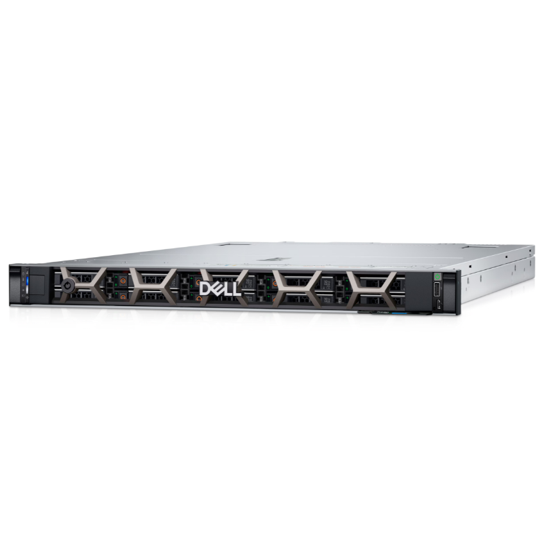


Dell PowerEdge R660 Rack Server
PRODUCT DESCRIPTION
Dell PowerEdge R660 Rack Server (Advance CTO, Please Enquire for Further Information) - Local Warranty
High-Performance Enterprise Rack Server for Modern Data Centers
Dell Technologies PowerEdge R660 Rack Server is a high-performance enterprise server platform designed for virtualization, cloud computing, databases, analytics, and mission-critical business applications. Built for modern data center environments, the PowerEdge R660 delivers scalable compute performance, reliability, and flexibility for demanding enterprise workloads.
Optimized for Virtualization and Business-Critical Applications
The Dell PowerEdge R660 supports intensive workloads including virtualization clusters, ERP systems, software-defined infrastructure, analytics platforms, collaboration applications, and enterprise databases. Its advanced architecture enables organizations to efficiently handle growing workloads while maintaining strong operational performance.
Flexible Configure-To-Order Infrastructure Platform
As an Advance CTO (Configure-To-Order) solution, the Dell PowerEdge R660 Rack Server supports customizable configurations including processors, memory, storage, networking, and expansion options. Organizations can tailor infrastructure according to virtualization environments, database deployments, cloud platforms, and business application requirements.
Built for Enterprise and Data Center Deployment
Designed for enterprises, government agencies, educational institutions, and service providers, the PowerEdge R660 provides reliable infrastructure for modern data center operations. Its rack-mounted architecture supports efficient deployment, centralized management, and enterprise-grade operational reliability.
Technical Specifications
General
Model: PowerEdge R660
Product Name: Dell PowerEdge R660 Rack Server
Manufacturer: Dell Technologies
Server Type: Enterprise Rack Server
Form Factor: 1U Rack Server
Deployment: Virtualization, cloud computing, high-density enterprise workloads, software-defined infrastructure
Configuration Type: Advanced CTO (Configure-To-Order)
Processor Platform: 4th Gen Intel® Xeon® Scalable Processors
Architecture: Dual-Socket Enterprise Compute Platform
Target Workloads: Virtualization, databases, analytics, cloud infrastructure, HPC, enterprise applications
Processor Specifications
Processor Support: Up to 2 x 4th Gen Intel Xeon® Scalable Processors
Maximum CPU Cores: Up to 60 Cores per Processor
Maximum Total Cores: Up to 120 Cores
Processor Socket: LGA4677
Maximum Processor TDP: Up to 350W per CPU
Processor Architecture: Intel Xeon Scalable Platform
Memory Specifications
Memory Technology: DDR5 ECC RDIMM
DIMM Slots: Up to 32 DIMM Slots
Maximum Memory Capacity: Up to 8TB
Memory Speed: Up to 4800 MT/s
Memory Protection: ECC Supported
Storage Specifications
Storage Architecture: Flexible CTO Configuration
Supported Storage Types:
• NVMe SSD
• SAS SSD
• SATA SSD
• HDD
Drive Bay Options:
• Up to 10 x 2.5-inch NVMe/SAS/SATA drives
• EDSFF storage configurations supported
Hot Swap Drives: Supported
RAID Support: Supported
Storage Controller Options: Dell PERC RAID Controllers
Expansion & PCIe
PCIe Generation: PCIe Gen5
Expansion Slots: Multiple PCIe Gen5 Slots
GPU Support: Selected single-width GPU support
OCP Support: OCP NIC 3.0 Supported
Networking Expansion: Supported
Networking
Network Interface: CTO Dependent
Supported Networking Options:
• 1GbE Ethernet
• 10GbE Ethernet
• 25GbE Ethernet
• 100GbE Networking
• OCP 3.0 Network Adapters
Remote Management: Dell iDRAC9 Enterprise
Out-of-Band Management: Supported
Power Specifications
Power Supply Type: Dual Hot Plug Redundant Power Supplies
Power Redundancy: Supported
Power Efficiency: 80 PLUS Platinum / Titanium Supported
Cooling & Thermal Design
Cooling Type: Enterprise High Efficiency Cooling
Optimized Airflow Design: Supported
Thermal Monitoring: Supported
Redundant Fans: Supported
Management & Security
Management Platform: Dell OpenManage with iDRAC9
Remote Monitoring: Supported
Firmware Updates: Supported
Server Health Monitoring: Supported
Secure Boot: Supported
TPM Security: Supported
Silicon Root of Trust: Supported
System Lockdown: Supported
Virtualization Support
Supported Hypervisors:
• VMware vSphere
• Microsoft Hyper-V
• Linux KVM
• Red Hat Virtualization
Container Platforms: Kubernetes Ready
Cloud Deployment: Supported
Operating System Compatibility
Supported Operating Systems:
• Microsoft Windows Server
• Ubuntu Server
• Red Hat Enterprise Linux
• SUSE Linux Enterprise Server
• VMware ESXi
Design & Construction
Form Factor: 1U Rack Mount
Rack Compatibility: Standard Enterprise Rack
Deployment Environment: Data Center / Cloud Infrastructure / Enterprise IT
Construction: Enterprise Grade Rack Chassis
Performance & Features
High-density dual-socket compute platform
4th Gen Intel Xeon Scalable architecture
DDR5 high-speed memory support
PCIe Gen5 expansion capability
Flexible NVMe storage deployment
Enterprise lifecycle and remote management
Optimized for virtualization and cloud workloads
Scalable enterprise compute infrastructure
Package Contents
Dell PowerEdge R660 Rack Server Chassis
Power Supply Units (configuration dependent)
Rail Kit (optional)
Documentation
CTO Components according to final build
Key Features
1U enterprise rack server
Dual Intel Xeon Scalable processor support
DDR5 ECC memory architecture
PCIe Gen5 expansion support
Flexible NVMe storage options
Dell iDRAC9 remote management
Virtualization optimized platform
Advanced CTO configurable deployment
Typical Use Cases
Enterprise virtualization
Database hosting
Cloud infrastructure
Analytics workloads
Software-defined storage
High-density compute environments
Application hosting
Private cloud deployment
How to Configurate Server?
Step 1:
What is the Server Form Factor? Tower or Rackmount Server?
What is the number of CPU Core or Ram or HDD usable size require?
What is the number of CPU Processor? 1S or 2S or 4S?
What is the RAID Configuration? Any specific HDD or SSD? 7.2K or 10K?
What is the specific NIC is required? Base-T 1G or SFP+? Or Fibre Channel?
What is the number of year maintenance support required? Minimum 3 years
Step 2:
How many number of unit Server?
Any VM workload? Required any VMware license? Or Window OS Hyper-V?
How do you store data currently? Any NAS or SAN Storage?
How do you doing the backup? Required any backup proposal? IDPA 8TB?
Do you require burn-in test services?
Do you need hard disk retention services?


