A digital twin is a virtual copy of a real asset, such as a machine, a production line, a building or a data centre, that is kept in step with the real thing using live data from sensors and control systems. An AI digital twin adds models on top: AI that predicts what will happen next, tests what-if scenarios faster than physics solvers alone, or trains robots and vision systems inside the virtual copy before they touch the real one. The value is simple. You can make expensive mistakes in software first.
The term is used loosely, so it helps to separate a true digital twin from the 3D models and simulations that are often sold under the same name.
Digital twin vs simulation vs 3D model
| 3D model | Simulation | Digital twin | |
|---|---|---|---|
| What it is | A geometric drawing of the asset | A model of behaviour under chosen conditions | A model linked to the specific real asset |
| Live data | No | Usually no | Yes, from sensors, PLCs, BMS or DCIM |
| Lifespan | Design stage | A study or project | The whole life of the asset |
| Typical question | What does it look like? | What would happen if? | What is happening now, and what will happen next? |
Many useful projects stop at simulation, and that is fine. A full twin, with a live data feed and someone responsible for keeping it accurate, is a long-term commitment.
What does the AI add?
- Prediction. Models trained on sensor history forecast failures, energy use or throughput.
- Fast surrogates. AI models approximate slow physics calculations, such as airflow or heat, so scenarios run in seconds, with a full solver used to check the important ones.
- Synthetic training data. The twin generates labelled images and scenarios for vision and robot models. See synthetic data for AI.
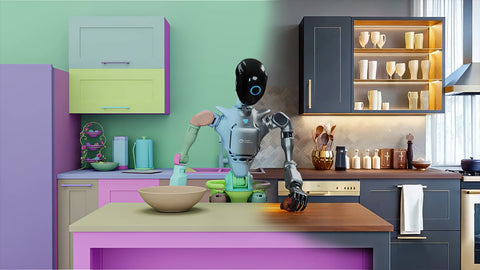
- Robot and agent training. Robots learn and are tested in the twin first, the core idea behind physical AI and world models.
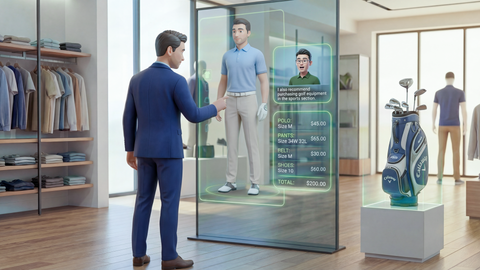
- Natural-language access. Staff ask the twin questions in plain English rather than reading dashboards.
How are digital twins used in manufacturing?
- Line and layout planning. Test a new layout, conveyor speed or robot cell before moving equipment.
- Virtual commissioning. Debug control logic against the virtual line, so start-up on site is shorter.
- Predictive maintenance. Compare live vibration, temperature and current readings with expected behaviour.
- Quality. Generate defect images to train inspection cameras; our quality inspection guide covers the hardware.
- Operator training. Practise rare or hazardous procedures safely.
Platforms such as NVIDIA Omniverse, built on the OpenUSD scene format, are designed to combine CAD, factory layouts, robots and sensor data in one physically based scene. Singapore has long experience at city scale: Virtual Singapore is a national 3D digital twin used for planning and simulation.
How are digital twins used in data centres?
- Cooling and airflow. Model hot spots before adding high-density AI racks. See liquid vs air cooling for AI servers.
- Power. Test what happens to the electrical chain when a UPS or feed fails.
- Capacity planning. Check whether a new rack fits the space, power and cooling available.
- Design of new AI facilities. Large AI data centres are increasingly designed and validated virtually before construction, and NVIDIA publishes Omniverse-based reference designs for this.
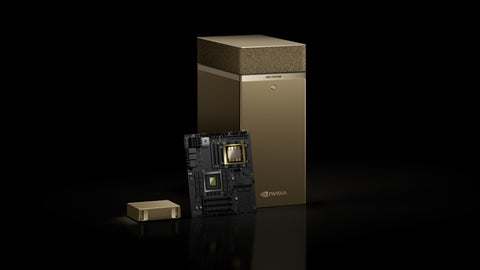
The same thinking scales down. A server room with a few AI systems won't justify a full twin, but a simple thermal and power model before installing a DGX Station-class machine prevents surprises.
The 3D model is the easy part of a digital twin. The hard part is the data: clean, live and trusted. Most twins that fail do so because nobody owned the data feed after the launch demo.
Where do digital twin projects go wrong?
- No specific question. A twin built to look impressive rather than to answer a decision.
- Stale data. The real asset changes and the twin doesn't.
- Too much fidelity. Photoreal detail where a simple model would answer the question.
- OT and IT integration. Getting data out of machine controllers safely is often the largest task, and it needs network segmentation.
- Over-trusting AI surrogates. Fast predictions still need validation against physics or measurements.
What hardware does a digital twin need?
| Scale | Typical hardware |
|---|---|
| Viewing and light authoring | Workstation with a mid-range RTX PRO GPU |
| A production line or server room, physically based rendering | Workstation with RTX PRO 6000-class GPU (96 GB) |
| A full factory or facility, many users, AI surrogates | Multi-GPU RTX PRO servers, fast shared storage and networking |
| AI models that run against live sensor data on site | Edge computers such as Jetson, or a small GPU server |
Scene files and sensor histories grow quickly, so plan shared storage with the GPUs, not after them.
Buying in Singapore
For authoring and viewing, the NVIDIA RTX PRO 4000 Blackwell (S$5,640) and RTX PRO 5000 Blackwell (S$14,971.20). For large scenes, the RTX PRO 6000 Blackwell Workstation Edition (S$29,100) and, for servers, the Server Edition (S$32,999). For AI at the machine, the Jetson AGX Thor 128GB Developer Kit (S$9,075.60). For shared project storage, the Synology RS2423+ (S$4,002) (listed 11 Nov 2026; prices change; ask for a current quotation). GPU servers such as the Lenovo ThinkSystem SR675 V3 are price on request. We don't list simulation software licences, so ask us if you need them sourced. To start, use Request for Quotation on the product page, call (65) 6978 3502, email Sales@sourceit.com.sg or use our contact page.
Frequently asked questions
What is a digital twin? A digital twin is a virtual model of a specific real asset, such as a machine, factory or data centre, that is kept up to date with live data so it can be used to monitor, predict and test changes.
What makes a digital twin an AI digital twin? AI models are added to predict failures, approximate slow physics simulations, generate synthetic training data or train robots inside the virtual environment.
How is a digital twin different from a simulation? A simulation models behaviour under chosen conditions for a study. A digital twin stays connected to one real asset through live data for its whole life.
What hardware does a digital twin need? Viewing needs an RTX workstation. Physically based scenes of a line or room need RTX PRO 6000-class GPUs, and full-facility twins need multi-GPU servers with fast shared storage.

SourceIT Approved
Researched and verified by the SourceIT team for Singapore buyers.