A world model is an AI system that learns how an environment behaves, so it can predict what will happen next, including what happens after an action. A large language model (LLM) predicts the next word in a piece of text. A world model predicts the next state of a scene: where a falling box lands, how a car moves when it brakes, what a robot arm will touch if it reaches left. Google DeepMind describes world models as systems that use their understanding of the world to simulate parts of it, so an agent can predict both how an environment will evolve and how its own actions will change it.
That is why world models are often called the next step beyond LLMs. Language models know a great deal about the world from text, but they have never had to keep a cup on a table or a car in its lane. World models are trained mostly on video and sensor data, and they are aimed at the machines that have to do those things.
World models are the training engine behind physical AI and embodied AI, so read that post too if you are planning a robotics or automation project.
World model vs large language model: what is the difference?
| Large language model | World model | |
|---|---|---|
| Learns from | Text and code, plus images in multimodal models | Video, images, sensor data, actions |
| Predicts | The next token | The next frame or state of an environment |
| Main question it answers | "What should I say?" | "What will happen if I do this?" |
| Typical users | Office staff, developers, customer service | Robotics, autonomous vehicles, simulation and game teams |
| Hardware pressure | Memory capacity and bandwidth | Heavy compute for video generation, plus large datasets |
The two are converging. Newer models handle language, vision and action in one system, so a robot can take a spoken instruction, understand the scene and plan a movement with the same model. See multimodal AI explained for how one model handles several types of input.
Which world models exist today?
- Google DeepMind Genie 3 (announced 5 August 2025) generates interactive environments from a text prompt that you can move through in real time at 24 frames per second and 720p, staying consistent for a few minutes. DeepMind lists its limits openly: interaction lasts minutes rather than hours, text in scenes is unreliable, and it can't reproduce real locations with geographic accuracy. It was released as a research preview.
- NVIDIA Cosmos 3 (launched at GTC Taipei on 1 June 2026) is an open world foundation model for physical AI. NVIDIA says it can be used as a vision-language model, as a world model that simulates environments and predicts future states, or as the backbone for "world action models" that train robots. It handles text, images, video, sound and action trajectories, and the weights are released under an open licence so companies can adapt it with their own data.
- Meta V-JEPA 2 is a 1.2-billion-parameter model that learns from video to help robots plan in unfamiliar environments. It is small by LLM standards, which shows that world models don't have to be huge to be useful.
Source: Google DeepMind Genie 3 announcement (Aug 2025); NVIDIA Cosmos 3 press release (1 Jun 2026); press coverage of V-JEPA 2. Compiled 11 Nov 2026. This field moves fast, so check the latest releases.
What can businesses actually do with a world model?
Very few companies will train a world model from scratch. The practical uses are downstream.
- Synthetic training data. Generate thousands of variations of a scene (lighting, clutter, rare defects, near-misses) to train a vision or robot model without collecting each one for real.
- Testing before deployment. Run a robot's control policy through simulated situations, including dangerous ones, before it goes near people.
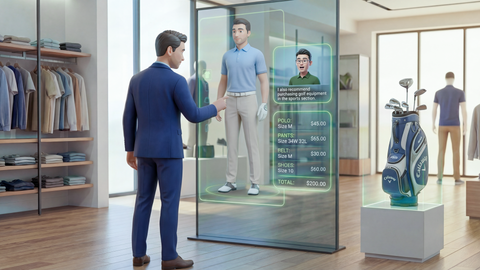
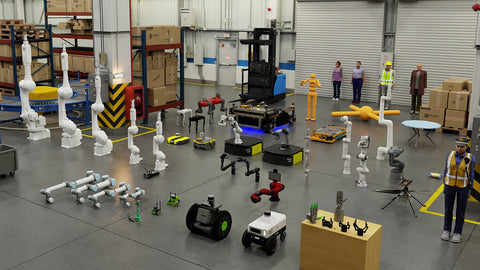
- Digital twins. Combine a 3D model of a site with a world model that predicts how people, goods or vehicles will move through it.
- Video understanding. Used as a reasoning model, a world model can review camera footage and explain what happened and why.
An LLM tells you what a forklift is. A world model predicts where the forklift will be in two seconds. For any business that automates physical work, the second answer is the one that prevents accidents.
What hardware does world model work need?
It depends on which job you do.
| Task | Main bottleneck | Typical hardware |
|---|---|---|
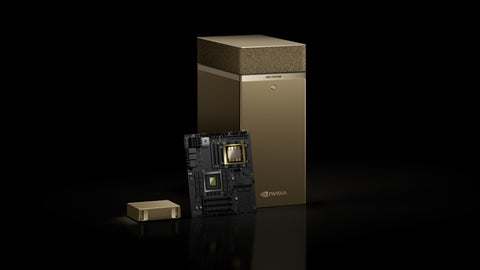
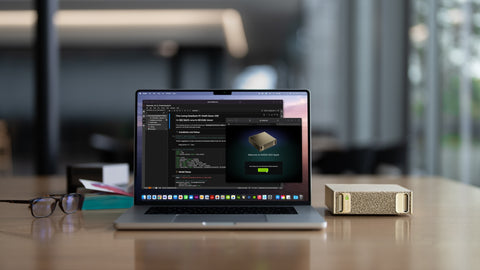
| Trying open world models and small fine-tunes | Memory capacity | 128 GB GB10 desktop such as DGX Spark or ASUS Ascent GX10 |
| Generating synthetic video at scale | GPU compute and VRAM | RTX PRO 6000 Blackwell workstation (96 GB), or several |
| Post-training on your own video data | Compute, memory and fast storage | DGX Station GB300, GPU servers, NVMe storage |
| Running the resulting policy on a robot | Power and latency | Jetson AGX Orin or Jetson AGX Thor |
Video is much heavier than text. A few minutes of high-resolution footage contains far more data than a long document, and datasets grow quickly. Plan storage alongside the GPU; our post on who actually needs 96 GB of VRAM covers when a professional GPU is worth it.
Are world models ready for production?
Partly. Their use for generating training data and testing robots is already established in automotive and robotics teams. Their use as a live decision-maker in safety-critical equipment is still early. Researchers point out that it is hard to explain why a world model predicts a particular outcome, and generated scenes can contain subtle physical errors. Treat a world model as a way to train and test faster, and keep validated safety controls on the real machine.
Buying in Singapore
To experiment with open world models, the NVIDIA DGX Spark 4TB (S$9,450), ASUS Ascent GX10 128GB/2TB (S$10,500) and HP ZGX Nano G1n 4TB (S$11,499) give you 128 GB of unified memory. For synthetic data generation, the NVIDIA RTX PRO 6000 Blackwell Workstation Edition (S$29,100) and, for rack servers, the RTX PRO 6000 Blackwell Server Edition (S$32,999). For robots, the Jetson AGX Thor 128GB Developer Kit (S$9,075.60) (listed 11 Nov 2026; prices change; ask for a current quotation). DGX Station GB300 systems such as the MSI XpertStation WS300 and HP ZGX Fury G1n are price on request. To start, use Request for Quotation on the product page, call (65) 6978 3502, email Sales@sourceit.com.sg or use our contact page.
Frequently asked questions
What is a world model in AI? A world model is an AI system that learns how an environment behaves so it can predict what happens next, including the result of an action. It is trained mostly on video and sensor data rather than text.
How is a world model different from an LLM? An LLM predicts the next word in text. A world model predicts the next state of a physical scene, such as where an object will move. LLMs answer what to say; world models answer what will happen.
What are examples of world models? Examples include Google DeepMind's Genie 3, which generates interactive environments in real time, NVIDIA's open Cosmos 3 model for physical AI launched in June 2026, and Meta's V-JEPA 2 for robot planning.
What are world models used for in business? Mainly to generate synthetic training data, test robots and autonomous systems in simulation, build digital twins of sites, and analyse what happened in video footage.
Do I need a supercomputer to use a world model? Not to experiment. A 128 GB GB10 desktop can run open models and small fine-tunes. Generating synthetic video at scale or post-training on large datasets needs RTX PRO 6000-class GPUs, a DGX Station or GPU servers.

SourceIT Approved
Researched and verified by the SourceIT team for Singapore buyers.