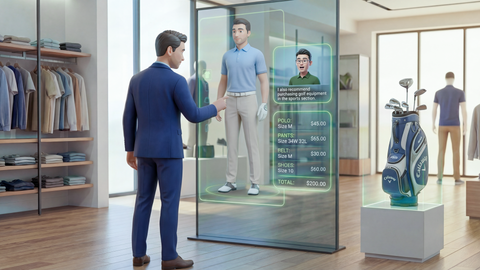
Ordinary digital signage plays a schedule and has no idea whether anyone looked. AI digital signage adds a camera or sensor and a small computer that analyses the scene on the spot: how many people passed, how many looked at the screen and for how long, and at what times. Those measurements can feed a report, or change what the screen shows in the moment. Done well, it turns a screen from a cost into something measurable. Done carelessly, it becomes a camera pointed at the public with no notice, which is a data protection problem. In Singapore the design decisions that matter are whether individuals can be identified, whether any images are kept, and whether people are told.
What can AI add to a signage screen?
| Capability | What it tells you or does |
|---|---|
| Footfall counting | How many people passed the screen, by hour and day |
| Attention measurement | How many looked, and for how long |
| Dwell time | How long people stayed in front of the display |
| Content comparison | Which creative held attention longer |
| Triggered content | Change the message when someone approaches, a queue forms or a product is picked up |
| Context rules | Switch content by time, weather, stock level or crowd size |
| Generated content | Draft variations of text and artwork for review before publishing |
Some systems also estimate broad audience characteristics such as age band. That moves closer to profiling individuals and deserves a clear business reason and advice before it is switched on.
How does it work?
- A camera or sensor near the screen captures the area in front of it.
- A computer at the screen runs a vision model on each frame and reduces it to numbers: a count, a duration, a timestamp.
- In a privacy-conscious design the frame is discarded immediately; only the numbers are kept.
- The signage software uses the numbers to report or to select content.
Processing at the screen, not in the cloud, is what makes step 3 possible, and it also means the system keeps working if the connection drops. See edge AI vs cloud AI.
What hardware does it need?
- A commercial display rated for long daily hours. Many include a built-in media player that handles scheduled content without an external box.
- A camera or sensor with a suitable field of view.
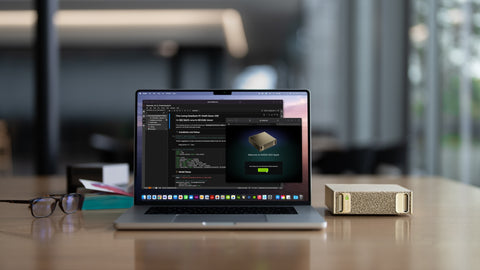
- Compute for the analytics. A built-in player usually cannot run vision models. A mini PC with a capable processor handles one camera with a light model; several cameras or heavier models call for an edge AI module. See NPU vs GPU vs TPU.
- Signage software that can accept triggers and report on them.
- Network, wired where possible.
For player selection see the best mini PCs for signage and kiosks and can one ASUS NUC power a signage network.
What does PDPA mean for audience analytics?
Under Singapore's Personal Data Protection Act, an image of an identifiable individual is personal data, and capturing it is collection. Points to settle before a camera goes up:
- Can anyone be identified? Counts and durations that cannot be linked back to a person are much lower risk than stored faces or any form of recognition.
- Is anything stored? A design that analyses frames in memory and keeps only aggregate numbers avoids holding images at all. Confirm with the vendor that this is what the product really does, including in its diagnostic and debug modes.
- Are people told? Clear notice at the location stating that a sensor is in use and why.
- Is the purpose limited? Data collected to measure advertising should not be reused for something else.
- Who else touches the data? If analytics run in a vendor's cloud, the vendor is processing on your behalf and the arrangement needs to be covered by contract.
- Is it protected? The camera and computer are network devices and need the same care as any other.
This is general information to help frame the questions, not legal advice. Guidance from the Personal Data Protection Commission should be checked for the current position, and a deployment in a public-facing space is worth a short data protection assessment. See also office CCTV and PDPA and AI cameras vs traditional CCTV.
The most useful audience analytics never needs to know who anyone is. If a system asks to recognise individuals to tell you how many people looked at a screen, it is collecting more than the question requires.
Is it worth it?
It depends on whether the measurement will change a decision. It tends to pay for retailers and landlords who sell or justify screen space, for chains comparing creative across outlets, and where content genuinely should change with the audience or queue. It is hard to justify for a single lobby screen showing announcements. A sensible trial: one screen, counting and attention only, four weeks, with one question you want answered. See can your signage actually sell more.
Buying in Singapore
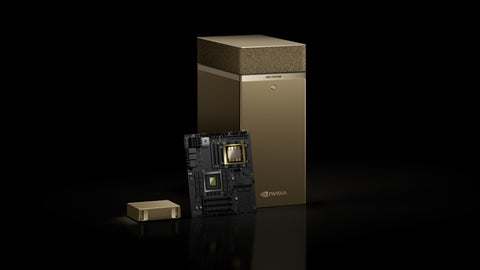
Commercial displays: the Samsung QM43C 43-inch (S$1,175), QM55C 55-inch (S$1,625) and QM65C 65-inch (S$2,187.50). Players and analytics compute: the GMKtec NucBox G5S for playback only (S$459.02), the GMKtec NucBox K13 for playback with light on-device analytics (S$1,214.22), and the NVIDIA Jetson Orin Nano Super Developer Kit for developing vision analytics (S$696) (listed 11 Nov 2026; prices change; ask for a current quotation). Audience analytics software is chosen separately and is not included with this hardware. To start, use Request for Quotation on the product page, call (65) 6978 3502, email Sales@sourceit.com.sg or use our contact page.
Frequently asked questions
What is AI digital signage? It is digital signage combined with a camera or sensor and on-site AI processing, so the system can measure how many people pass and look at the screen and adapt content in response.
How does audience analytics work? A vision model analyses camera frames at the screen and converts them into anonymous figures such as counts, attention time and dwell time. In a privacy-conscious design the images are discarded immediately.
Is audience analytics allowed under PDPA? It can be, but images of identifiable people are personal data. Systems that keep only anonymous aggregate figures, store no images and give clear notice carry much lower risk. Seek advice for your specific deployment.
Does AI signage need a special screen? No. A standard commercial display works. The additions are a camera or sensor, a computer able to run the analytics, and signage software that supports triggers and reporting.

SourceIT Approved
Researched and verified by the SourceIT team for Singapore buyers.