The Sovereign AI Revolution: Why Singapore Businesses Should Consider Running AI Locally

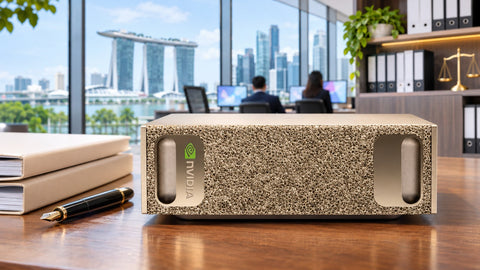
For some Singapore businesses it is worth considering, mainly those that handle regulated, contractual or highly confidential data and use AI heavily. The case has grown in 2026. MAS finalised its Guidelines on AI Risk Management on 7 Oct 2026. PDPC finalised its Advisory Guidelines on generative AI on 20 Jul 2026, putting primary responsibility on the organisations that deploy AI systems. Meanwhile, none of the four largest business AI vendors offers Singapore in-country processing for its flagship product as of 5 Nov 2026. Running open-weight models locally, on hardware such as the NVIDIA DGX Station GB300, keeps the data and the processing in your premises. It does not make you compliant by itself, and for many workloads cloud AI remains cheaper and more capable. The decision is workload by workload.
What has changed for Singapore businesses in 2026?
Several developments now point in the same direction: more accountability for organisations that deploy AI, and more national investment in local AI capability.
| Development | What it says | What it means for running AI locally |
|---|---|---|
| PDPC Advisory Guidelines on Use of Personal Data in Generative AI (final 20 Jul 2026) | "System Deployers bear primary responsibility" for ensuring the GenAI systems they choose meet PDPA obligations; SaaS providers acting for them are data intermediaries (law-firm summaries) | Choosing where AI runs is now clearly the deployer's decision and responsibility |
| PDPA Transfer Limitation Obligation (s26) and PDP Regulations 2021 | Personal data sent overseas needs protection "comparable" to the PDPA, e.g. via contract or certification | Local processing avoids the overseas-transfer step for that workload; other PDPA duties remain |
| MAS Guidelines on AI Risk Management (final 7 Oct 2026, effective 7 Oct 2027) | Apply to all financial institutions and all forms of AI; "FIs remain accountable for AI used in the services they deliver" | Banks and insurers need inventories, controls and oversight for every AI use, wherever it runs |
| Banking Act s47 | Customer information "must not, in any way, be disclosed" except as the Act allows | Any external AI service handling customer information needs a permitted ground; check with counsel |
| Vendor processing locations (5 Nov 2026) | OpenAI: Singapore storage at rest, processing in US, EU, UAE. Anthropic: "us" or "global" inference. Microsoft 365 Copilot in-country list: Singapore not included | Cloud AI generally means overseas processing for flagship products |
| National investment | Budget 2024: more than S$1bn for AI over five years, including up to S$500m for compute. ASPIRE 2B (8 Jun 2026): more than 1,500 NVIDIA H200 GPUs | Signals that Singapore treats local AI compute as strategic |
Sources: PDPA and PDP Regulations 2021 (Singapore Statutes Online); Allen & Gledhill and ComputerWeekly summaries of the PDPC GenAI guidelines; MAS media release (7 Oct 2026); Banking Act 1970 s47; OpenAI, Anthropic and Microsoft documentation; Smart Nation press release (1 Mar 2024); MDDI (8 Jun 2026). All accessed 5 Nov 2026. This is general information, not legal advice.
What does Singapore's public sector do?
It offers a useful example. GovTech's Pair, an LLM tool for public officers, is approved for data up to "RESTRICTED \ SENSITIVE NORMAL". Its developers say it "protects confidential government data from being entered into commercial platforms" and that "conversations are kept private from LLM providers". Pair had 98,527 monthly active users in Q2 2026. The underlying model and hosting are not published. The lesson for businesses is not that everything must be on-premises. It is that sensitive work goes through a controlled channel, with clear rules on which data may be used.
Singapore also produces open models suited to local use. AI Singapore's SEA-LION family is tuned for Southeast Asian languages and is downloadable from Hugging Face, including 4-bit and 8-bit versions. Check each model card for licence terms before commercial use.
Which Singapore industries benefit most from local AI?
The common thread is confidential data combined with steady, high-volume AI use:
- Financial services: customer information is covered by banking secrecy and MAS outsourcing rules. Our post on sending confidential financial data to a public AI model covers this in detail.
- Legal, accounting and corporate services: client confidentiality obligations and engagement terms often restrict where client documents may be processed.
- Healthcare and insurance: sensitive personal data with high harm if exposed.
- Manufacturing and engineering: drawings, process data and trade secrets that clients expect to stay inside the company.
- Government contractors: data handling terms set by the agency.
For marketing copy, public research or general drafting, cloud AI is usually the better tool: frontier quality, no hardware and pay-as-you-go pricing.
Running AI locally is a control decision, not a compliance certificate. The obligations follow the data wherever it is processed.
What still applies if the AI runs in your own office?
Everything except the overseas transfer. The PDPA's Protection Obligation requires "reasonable security arrangements" for personal data in your possession. A breach affecting 500 or more people is notifiable, and the PDPC must be told no later than three calendar days after you assess it as notifiable. MAS-regulated firms need the same AI inventory, risk assessment and human oversight for a local model as for a cloud one. A server under a desk can also be less secure than a well-run cloud service if nobody patches it. See whether your most powerful computer should be on the internet and who manages a DGX Station.
Do grants help with local AI hardware?
Check before you count on it. The Productivity Solutions Grant closed on 29 Sep 2026. EnterpriseSG's new EDGE grant launched on 30 Sep 2026, offering up to 70% support for SMEs, capped at S$100,000 a year across all activities. EnterpriseSG's pages do not say whether on-premises AI servers qualify. The Enterprise Compute Initiative provides cloud credits from Google Cloud, Microsoft and AWS plus consultancy support, not on-premises hardware. Budget 2026 introduced a 400% tax deduction on qualifying AI spend, capped at S$50,000 a year for YA2027 and YA2028. Secondary sources report that hardware is excluded, so confirm with IRAS. Ask EnterpriseSG or IRAS in writing before you budget on any support.
How do you get started?
- Map AI use cases against data classes and any sector rules (MAS, contractual, client terms).
- Keep cloud AI for public and low-sensitivity work; shortlist confidential workloads for local hosting.
- Pilot those workloads with open-weight models, starting on a smaller GB10 system if volumes are modest.
- Write down the governance: who can use the system, what is logged, how it is patched and backed up.
- Scale to a DGX Station when several teams or larger models need it.
For the concepts behind this, see Sovereign AI: Why Should Your Company's Intelligence Live on Someone Else's Server? and data residency vs data sovereignty. For a smaller-business view, read whether SMEs can benefit from sovereign AI.
Buying in Singapore
SourceIT supplies DGX Station GB300 systems from HP (ZGX Fury G1n), MSI, ASUS, GIGABYTE and Supermicro, all price on request. For pilots, the NVIDIA DGX Spark 4TB is S$9,300. For backups of model files and documents, the Synology RackStation RS822RP+ is S$2,086.80 (both listed 5 Nov 2026). Browse the DGX Spark and DGX Station collection. For a quotation, use Request for Quotation on the product page, call (65) 6978 3502, email Sales@sourceit.com.sg or use our contact page.
Frequently asked questions
Does Singapore law require AI to run locally? Not generally. The PDPA allows overseas transfers of personal data if the recipient provides comparable protection, for example through contracts or certifications. Specific sectors, contracts or client terms may impose stricter rules.
When do the MAS AI risk management guidelines take effect? MAS published them on 7 Oct 2026. They take effect on 7 Oct 2027, with sections 5 and 6 phased in by 7 Oct 2028, and apply to all financial institutions and all forms of AI.
Can I use the Productivity Solutions Grant for AI hardware? No. PSG closed on 29 Sep 2026 and was replaced by EDGE from 30 Sep 2026. EnterpriseSG has not stated whether on-premises AI hardware qualifies under EDGE, so ask before you budget for it.
Is SEA-LION free to use commercially? SEA-LION models are downloadable from AI Singapore and Hugging Face, but licence terms vary by version and base model. Check the model card for each release before commercial use.
Is local AI more secure than cloud AI? Not automatically. It removes third-party processing, but security then depends on your own patching, access control, monitoring and backups. A poorly managed local server can be riskier than a well-run cloud service.

SourceIT Approved
Researched and verified by the SourceIT team for Singapore buyers.