RTX Spark Laptop vs DGX Spark vs ASUS GX10: Which to Buy SG

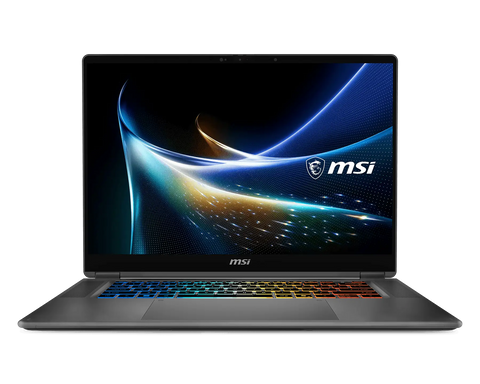
An RTX Spark laptop and a DGX Spark desktop both offer 128 GB of unified memory and a 1 petaFLOP FP4 class of Blackwell GPU, so the question Singapore buyers ask is whether the new laptop makes the desk unit redundant. The short answer: no, they are different chips for different jobs. The laptop runs NVIDIA's N1X superchip at 45 to 80 W under Windows 11; the desk units from ASUS, NVIDIA and HP run the GB10 superchip at a desktop power budget under DGX OS, with 200 GbE ports for clustering. On the SourceIT store that is the MSI Prestige N16 Flip AI+ 128 GB at S$11,041.26 against the ASUS Ascent GX10 4 TB at S$9,850, the NVIDIA DGX Spark at S$8,600 and the HP ZGX Nano G1n at S$11,499 list. This post compares memory, compute class, power, operating system, clustering and price, says when each wins, and explains running both with NVIDIA PAIR. For background read the RTX Spark laptop guide and the ASUS Agent Computer guide.
RTX Spark laptop vs DGX Spark vs GX10: specification table
| MSI Prestige N16 Flip AI+ (RTX Spark N1X) | ASUS Ascent GX10 (GB10) | NVIDIA DGX Spark (GB10) | HP ZGX Nano G1n (GB10) | |
|---|---|---|---|---|
| Superchip | NVIDIA RTX Spark N1X: 6144-core Blackwell RTX GPU + 20-core Grace CPU + NPU | NVIDIA GB10 Grace Blackwell: 20-core Arm CPU + Blackwell GPU | Same GB10 | Same GB10 |
| AI compute class | 1 PFLOPS (NVIDIA spec table) | 1 PFLOP FP4 (sparse) | 1 PFLOP FP4 (sparse) | 1 PFLOP FP4 (sparse) |
| Unified memory | 128 GB LPDDR5X, 256-bit; bandwidth not published | 128 GB LPDDR5X, 256-bit, 273 GB/s | 128 GB LPDDR5X, 273 GB/s | 128 GB LPDDR5X, 273 GB/s |
| Power | 45 to 80 W chip rating; 99.9 Whr battery; 140 W USB-C PD adapter | 240 W USB-C adapter | 240 W USB-C supply | Single 240 W USB-C |
| Operating system | Windows 11 Pro on Arm | NVIDIA DGX OS (Ubuntu-based) | NVIDIA DGX OS | NVIDIA DGX OS |
| Clustering | None published; 2x USB4 and Wi-Fi 7 only | ConnectX-7 2x 200 GbE QSFP; 2 units direct, 4 via switch | ConnectX-7 2x 200 GbE QSFP | ConnectX-7 2x 200 GbE QSFP |
| Storage | 2 TB NVMe, one M.2 Gen4 slot | 1, 2 or 4 TB NVMe | 4 TB | 4 TB |
| Size / weight | 16" 2-in-1, 13.9 to 16.9 mm, 1.9 kg | 150 x 150 x 51 mm, 1.48 kg | 150 x 150 x 50.5 mm, 1.2 kg | Compact desk unit |
| Display | Built-in 16" UHD+ Tandem OLED touch | External only | External only | External only |
| SourceIT price | S$11,041.26 | S$9,850 (4 TB) | S$8,600 | S$11,499 list |
The GB10 columns are near-identical because all three carry the same NVIDIA superchip and memory; our DGX Spark vs Ascent GX10 post covers their chassis and storage differences, and the GB10 buyer's guide ranks the whole OEM field.
N1X vs GB10: same memory ceiling, different chip
It is tempting to call RTX Spark a DGX Spark in a laptop; we avoid that because the chips differ. GB10 pairs a 20-core Arm CPU with a Blackwell GPU and is specified by NVIDIA at 128 GB of LPDDR5X on a 256-bit bus at 273 GB/s. N1X pairs a 6144-core Blackwell RTX GPU with a 20-core NVIDIA Grace CPU that NVIDIA designed with MediaTek, adds an NPU, and is specified at up to 128 GB of LPDDR5X on a 256-bit bus, but NVIDIA has not published a bandwidth figure for it, so we will not compare speed on paper. What they share is the number that governs what you can load: 128 GB addressed by CPU and GPU together, so a 70B model at FP8 or a 120B-class mixture at FP4 fits on either. NVIDIA rates the GB10 class at up to around 200 billion parameters on one unit; it has not published an equivalent figure for N1X, and the laptop's 45 to 80 W envelope against the GB10's desktop budget means the desk unit will hold higher sustained throughput on the same model. Treat the laptop as the same memory class at a lower power class, not as an equal.
Power and thermals: 45 to 80 W on battery vs 240 W at the desk
NVIDIA rates the laptop N1X at 45 to 80 W, and the MSI Prestige N16 Flip AI+ feeds it from a 99.9 Whr battery or a 140 W USB-C PD adapter in a chassis 13.9 to 16.9 mm thick. Every GB10 desk unit draws from a 240 W USB-C supply, with the DGX Spark's documented superchip TDP at 140 W, and has cooling sized for sustained load: a dual-fan cooler with five heat pipes on the GX10, an alloy shell that works as a heat spreader on the DGX Spark. A laptop gives full performance in bursts and then settles to what its thermals sustain, and a long inference or fine-tuning job on battery drains 99.9 Whr quickly; MSI publishes no battery-life figure and neither will we. A desk unit runs the same job at the same speed for as long as it is on. Interactive, intermittent and mobile work suits the laptop's envelope; a server workload does not.
Windows 11 vs DGX OS: which software stack do you want?
The RTX Spark laptop ships with Windows 11 Pro on Arm, and NVIDIA built the launch around making that useful: the first PyTorch-CUDA build for Windows on Arm, native Python and Conda, 97% of the top 15,000 Python packages, Windows Subsystem for Linux, and agents such as GitHub Copilot, OpenClaw, Hermes and Perplexity installed with guided setup under NVIDIA OpenShell and Microsoft Execution Containers. Office, Teams and the Adobe betas run on it, and it is your daily machine. The GB10 units run NVIDIA DGX OS, an Ubuntu-based Linux with the DGX container stack and NVIDIA Sync cluster tooling, worked on from any laptop over the network. For a Windows-standardised organisation the laptop removes the Linux learning curve; for a research group already on CUDA under Linux, DGX OS is what their code expects and the laptop adds an emulation question for any x86 tool in the chain. Our Windows on Arm compatibility guide covers what runs natively on N1X.
Clustering: 200 GbE on GB10, nothing published on N1X
This is the hard line between the two. Every GB10 unit carries NVIDIA ConnectX-7 with two QSFP ports at 200 GbE, so two GX10s link directly over a QSFP cable to pool 256 GB, and four reach 512 GB through a switch under NVIDIA Sync. That is how a S$19,700 pair of GX10 4 TB units, or S$17,200 of DGX Sparks, serves a 400B-class model no single box holds; the DGX Station GB300 vs DGX Spark post explains where that stops making sense. The MSI Prestige N16 Flip AI+ has two USB4 ports, Wi-Fi 7 and HDMI 2.1, and neither NVIDIA's N1X specification page nor MSI's page lists any clustering fabric. One RTX Spark laptop is a 128 GB ceiling; it does not become 256 GB with a second laptop. If your roadmap includes models above the single-unit limit, buy GB10.
Price, and running both with NVIDIA PAIR
At 128 GB the laptop costs more than the GB10 units that out-run it at the desk: the NVIDIA DGX Spark 4 TB is S$8,600, the ASUS Ascent GX10 4 TB is S$9,850 (and S$7,200 with 1 TB), and the HP ZGX Nano G1n lists at S$11,499 with promotional pricing on its product page. That is S$1,191.26 over the GX10 4 TB and S$2,441.26 over the DGX Spark for a UHD+ Tandem OLED touchscreen, keyboard, 99.9 Whr battery, Windows 11 Pro and a machine that closes and goes in a bag. If 128 GB on the move is the requirement, that is the price of it. If not, the 64 GB Prestige N16 Flip AI+ at S$6,440.44 plus a DGX Spark at S$8,600 costs S$15,040.44 and gives you a portable CUDA development machine and a 128 GB desk server that the laptop can call over the network, which brings us to NVIDIA PAIR.
NVIDIA PAIR, described in the RTX Spark launch announcement, serves inference from one NVIDIA machine to compatible Windows, Linux and macOS computers on the same network so that the other PCs stay free for their own work. The ASUS GX10 also lists PAIR support. The practical pattern for a Singapore team is a GB10 desk unit as the always-on endpoint, with RTX Spark laptops running smaller models locally away from the office and routing heavy requests to the desk unit in it. Prompts and documents stay on-premises either way, which matters for PDPA-governed data. For a team the desk unit is the shared asset and the laptop tier can be the 32 GB or 64 GB SKU rather than the 128 GB flagship.
RTX Spark laptop or DGX Spark: which should you buy?
Buy the RTX Spark laptop if you need a 128 GB model to run where you are, if your organisation is Windows-only, if the machine must double as your daily laptop with a display, or if you present and demo on site. The MSI Prestige N16 Flip AI+ model guide picks between the 32, 64 and 128 GB SKUs.
Buy a GB10 desk unit if the workload runs for hours, if you will ever cluster, if your stack is Linux and CUDA, if several people share the endpoint, or if price per 128 GB matters: the DGX Spark at S$8,600 and the GX10 from S$7,200 are the value options, and the HP ZGX Nano adds HP's enterprise management. Buy both, in the laptop-plus-desk pattern, if you have a team.
Buying RTX Spark laptops and GB10 units in Singapore
SourceIT stocks all three MSI Prestige N16 Flip AI+ SKUs, the ASUS Ascent GX10 in 1, 2 and 4 TB, the NVIDIA DGX Spark 4 TB and the HP ZGX Nano G1n, with commissioning available on the GX10. Use Request for Quotation on the product page, call (65) 6978 3502, or email Sales@sourceit.com.sg. We are GeBIZ and Vendors@Gov registered for government purchases. Confirm warranty terms for each SKU when requesting a quote, and use our AI hardware calculator and the AI workstations collection to size the memory you need before you choose laptop, desk or both.
Frequently asked questions
Is an RTX Spark laptop the same as a DGX Spark? No. The laptop uses the NVIDIA N1X superchip at 45 to 80 W under Windows 11; the DGX Spark, ASUS GX10 and HP ZGX Nano use the GB10 superchip at a desktop power budget under DGX OS. They share a 128 GB unified memory ceiling and a 1 PFLOP FP4 class.
Is the RTX Spark laptop as fast as a DGX Spark? NVIDIA has not published N1X memory bandwidth, so there is no paper comparison. The desk units run at a higher sustained power with cooling sized for continuous load, so expect them to hold higher throughput on the same model.
Can I cluster two RTX Spark laptops? No clustering fabric is published for N1X. GB10 units have ConnectX-7 200 GbE ports and link two directly or four through a switch under NVIDIA Sync.
Which costs more, the RTX Spark laptop or a DGX Spark? The 128 GB MSI Prestige N16 Flip AI+ is S$11,041.26; the DGX Spark 4 TB is S$8,600 and the ASUS GX10 4 TB is S$9,850. The laptop premium buys the screen, battery, keyboard and Windows 11.
Can an RTX Spark laptop use a DGX Spark as its model server? Yes. NVIDIA PAIR serves inference from an NVIDIA machine to Windows, Linux and macOS computers on the same network, so a GB10 desk unit can be the shared endpoint for RTX Spark laptops.
Which runs Windows? Only the RTX Spark laptop, with Windows 11 Pro on Arm. The DGX Spark, GX10 and ZGX Nano run NVIDIA DGX OS, an Ubuntu-based Linux.